
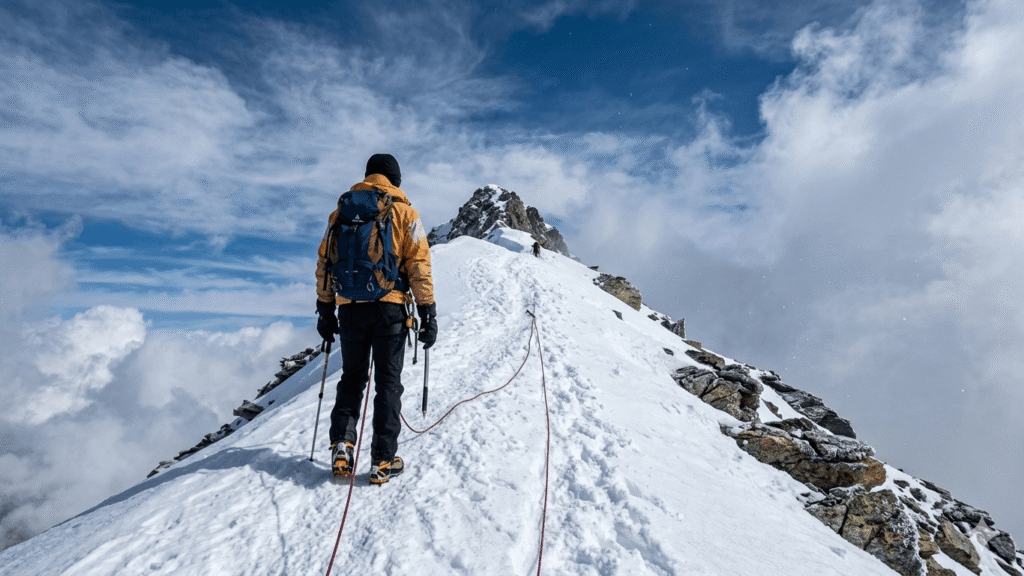
Climbing Kang Yatse II isn’t just another trek, it’s your entry into the world of high-altitude mountaineering. Standing tall at over 6,200 meters in Ladakh, this peak demands more than enthusiasm. It requires preparation, discipline, and the right mindset.
If you’re aiming to make Kang Yatse II your first 6000 m summit, the way you prepare will define your entire experience. At Captain Alpine Outdoors, we’ve guided many trekkers through this transition, from strong hikers to confident climbers. This guide is designed to help you arrive in Leh fully prepared, not uncertain or overwhelmed.
Understanding the Kang Yatse II Challenge
Kang Yatse II is often called one of the most achievable 6000 m peaks in India, but don’t mistake “achievable” for easy.
The journey begins through the stunning Markha Valley, gradually gaining altitude before reaching base camp at around 5,000 meters. From there, everything changes. The terrain becomes harsher, the air thinner, and every step demands more effort.
Summit day is the real test. Expect a 10–15 hour push across snow slopes, loose scree, and freezing winds, all while functioning on limited oxygen. It challenges not just your body, but your focus and mental strength.
Approach it like an expedition, not a trek, and your chances of standing on the summit increase significantly.
Training Plan for Kang Yatse II
Preparation should ideally begin 10 to 12 weeks before your expedition. The goal is simple: build endurance, strengthen your legs, and improve your ability to perform under fatigue.
Cardio is your foundation.
Aim for 3–5 sessions each week. Activities like running, cycling, stair climbing, or brisk walking for 45–60 minutes will help build the stamina you’ll rely on every single day in the mountains.
Simulate real trekking conditions.
Every couple of weeks, go for a long hike lasting 6–8 hours. Carry a backpack weighing around 8–10 kg. This helps your body adapt to long days on your feet and prepares you mentally for summit day.
Strength training is non-negotiable.
Focus on exercises like squats, lunges, step-ups, and core work. Strong legs and a stable core will protect your knees and back during steep ascents and descents.
Train your mind as well.
Even 5–10 minutes of daily breathing exercises or meditation can make a big difference. Staying calm and focused during the cold, dark hours of summit night is often what separates those who summit from those who turn back.
Essential Gear for Kang Yatse II
When it comes to high-altitude climbing, your gear can make or break your experience. The key is layering, so you can adapt to constantly changing conditions.
Clothing essentials include:
- Moisture-wicking base layers (top and bottom)
- A warm fleece and a lightweight down jacket
- Waterproof and windproof outer shell (jacket and pants)
- Heavy down jacket and insulated pants for summit day
- Warm gloves, outer mittens, woolen socks, balaclava, buff, and UV-protection sunglasses
Other must-haves:
- Sturdy, high-ankle trekking boots (already broken in)
- A 50–60 liter backpack and trekking poles
- A sleeping bag rated for at least –15°C
- Headlamp with extra batteries
- Water bottles (minimum 2 liters), sunscreen, lip balm, and personal medications
On our Kang Yatse II expeditions, Captain Alpine Outdoors takes care of all technical equipment and group safety gear. This allows you to focus entirely on your personal preparation and comfort.
Acclimatisation & Safety: The Real Game-Changer
No matter how fit you are, altitude doesn’t discriminate. Proper acclimatisation is critical.
A well-designed itinerary includes time in Leh to adjust, followed by gradual altitude gain through the Markha Valley. Before heading to base camp, spending time at Nimaling helps your body adapt naturally.
At Captain Alpine Outdoors, we prioritize safety at every step, daily health monitoring, experienced leaders, and strict turnaround times on summit day. Because in the mountains, reaching safely matters more than reaching the top.
Kang Yatse II is more than just a climb, it’s a milestone. It’s where many trekkers take their first real step into mountaineering.
With the right preparation, the right mindset, and the right team, this peak transforms from a daunting challenge into an achievable dream.
Train well. Pack smart. Respect the mountain.
And when the moment comes, you’ll be ready to take that final step onto your first 6000 m summit.